
The best streaming service in 2026 depends almost entirely on one question: what do you actually watch? Netflix wins on volume and global originals. Max wins on prestige drama. Apple TV+ wins on per-title quality. Prime Video is increasingly hard to justify unless you're already an Amazon customer. And Hulu is the stubborn sleeper that nobody talks about enough. If you're managing multiple subscriptions — rotating them strategically rather than paying for all five simultaneously — our guide to managing streaming subscriptions without losing track covers the logistics. This article covers the harder question: which services are actually worth your money right now, and how do they stack up against each other?
TL;DR
- Netflix — Best overall library; best if you watch at least 4 hours/week
- Max — Best for prestige TV and film; HBO catalogue alone justifies it
- Apple TV+ — Best per-title quality; worst value if you're a volume watcher
- Hulu — Best for next-day TV and mid-budget originals; underrated
- Prime Video — Best if you're already a Prime member; frustrating as a standalone
- Peacock — Best for live sports adjacent content; oddly cheap
- Paramount+ — Best for Star Trek fans and Yellowstone completionists
- Disney+ — Best for families; increasingly uneven for everyone else
Who Are the Big 3 of Streaming?
The big 3 of streaming are Netflix, Amazon Prime Video, and Disney+, measured purely by global subscriber count. Netflix reported approximately 301 million subscribers in early 2026. Disney+ (including Hulu under the Disney umbrella) sits around 210 million combined. Prime Video doesn't publish a standalone subscriber figure — it bundles inside Prime membership, estimated at over 200 million globally.
That's the corporate answer. The more honest answer for a viewer choosing a service? The big 3 that actually matter by content quality and viewer satisfaction are Netflix, Max, and Apple TV+. Subscriber count tells you about distribution deals and price sensitivity. It tells you nothing about whether you'll find something worth watching on a Tuesday night.
Netflix: Still the Default, But Not Without Cracks
Netflix is the best streaming service for most people who want one subscription and don't want to think about it. The library depth is unmatched — somewhere north of 5,500 titles in the US as of early 2026, though that number fluctuates monthly as licensing deals expire. Original production has slowed slightly compared to the 2021–2022 firehose era, but the quality ceiling on Netflix originals has risen. Shows like Squid Game Season 2 and The Diplomat Season 2 performed well critically and commercially in late 2025.
The pricing problem is real and worth naming. The ad-supported Standard tier is $7.99/month, but it carries genuine limitations — download restrictions, some content locked behind higher tiers. Standard (no ads) is $15.49. Premium is $22.99. That's a 187% price difference between entry and top tier. For a household with multiple viewers on different devices, you're functionally paying for Premium whether you want to or not.
If you want to go deeper on what's actually worth watching on Netflix rather than just knowing it exists, the best new series on Netflix right now breakdown is more useful than anything Netflix's own algorithm will surface.

Amid an international crisis, a US diplomat contends with her high-profile job as ambassador to the UK and her strained marriage to a political star.
Max: The Prestige Play
Max is the best streaming service for drama, and it's not particularly close. The HBO catalogue — The Sopranos, The Wire, Succession, The White Lotus — functions as a permanent quality floor that no competitor can match on sheer prestige-TV density. Every time a new HBO series launches to critical acclaim, Max justifies its $16.99/month (ad-free) price point all over again.
The Warner Bros. film library adds genuine weight. DC properties, the broader theatrical slate — Max has a depth that gets underrated in most streaming comparisons because people fixate on Netflix's original count.
My mild complaint: the Max interface is one of the worst UIs in the industry. Discovery is poor. The recommendation engine surfaces the same titles repeatedly. For a service with this quality of content, it's baffling that finding something to watch takes this much effort. WatchDeck was built partly for exactly this problem — an external tracker shouldn't be necessary to navigate a single service's own library, but here we are.

Follow the exploits of various guests and employees at an exclusive tropical resort over the span of a week as with each passing day, a darker complexity emerges in these picture-perfect travelers, the hotel’s cheerful employees and the idyllic locale itself.
Apple TV+: The Best Batting Average in Streaming
Apple TV+ is the best streaming service by per-title quality — and the worst by volume. The library sits at roughly 200–250 originals total as of early 2026. That's not a typo. Netflix releases that many titles in a quarter. But Apple's hit rate is extraordinary: Severance, Slow Horses, The Morning Show, Shrinking, Bad Sisters, Presumed Innocent. The number of genuinely excellent series per dollar spent is higher here than anywhere else.
The problem is the Wednesday-night test. If you want something to watch right now and you've seen everything on Apple TV+, you're done. There's no library depth to fall back on. Apple doesn't license third-party content. What you see is what you get.
At $9.99/month (or often bundled free with a device purchase), it's cheap enough to run alongside a primary service. As a standalone, it works for approximately four months before most viewers exhaust the catalogue. For a full breakdown of what's actually worth watching there, the best Apple TV+ shows guide saves you the scrolling.
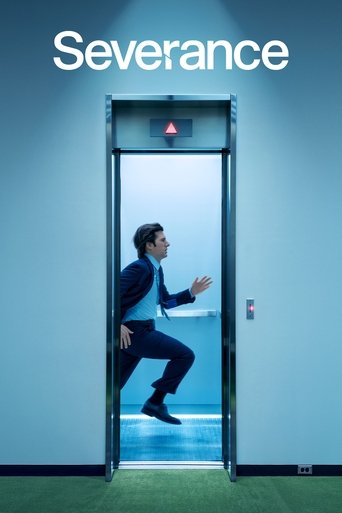
Mark leads a team of office workers whose memories have been surgically divided between their work and personal lives. When a mysterious colleague appears outside of work, it begins a journey to discover the truth about their jobs.

Follow a dysfunctional team of MI5 agents—and their obnoxious boss, the notorious Jackson Lamb—as they navigate the espionage world's smoke and mirrors to defend England from sinister forces.
Hulu: The Stubborn Sleeper
Hulu is the best streaming service for current TV, and it doesn't get nearly enough credit for it. The next-day broadcast deal — which brings ABC, NBC, and Fox programming within 24 hours of air — is genuinely useful in a way that sounds mundane until you actually use it. No other major SVOD service offers this.
Hulu's original output is mid-budget but more consistent than its reputation suggests. The Bear Seasons 3 and 4 (both landing in 2025) kept the show at the top of critical discussion. Only Murders in the Building is in its fifth season and still working. These aren't Netflix-scale productions, but they're reliably good television.
For a complete ranked assessment of Hulu's series library, the Hulu best series guide breaks down what's actually worth starting versus what the algorithm will push at you. And if you're specifically hunting for Hulu's film catalogue, best movies on Hulu is the better starting point.
The Disney bundle complicates the pricing math. Hulu standalone is $18.99/month (ad-free). The Disney+/Hulu/ESPN+ bundle is $26.99/month. If you want any Disney content or live sports, the bundle math works out. If you genuinely only want Hulu, standalone is fine — but most households end up on the bundle within a year.
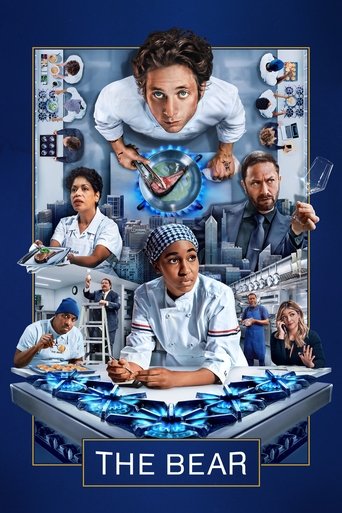
Carmy, a young fine-dining chef, comes home to Chicago to run his family sandwich shop. As he fights to transform the shop and himself, he works alongside a rough-around-the-edges crew that ultimately reveal themselves as his chosen family.
Prime Video: The Bundle Tax Streaming Service
Prime Video is the best streaming service if you're already paying for Amazon Prime ($139/year in the US). It's a genuinely poor choice as a standalone subscription, and I'll be blunt about that.
The library has improved. The Boys, Fallout, and Reacher are legitimate hits. MGM's acquisition gave Prime access to a deep film vault. But Prime Video's UX is structurally hostile — it mixes subscription content with rentals and purchases in a way that trains you to accidentally pay for things you thought were included. Every other major platform separates these clearly. Prime doesn't, and it's a deliberate design choice.
As of early 2026, Prime Video added a mandatory ad tier unless you pay an additional $2.99/month on top of Prime membership. That's the right move to flag because it's the kind of thing that gets buried in billing emails.
What's Actually Best to Stream Right Now?
The "best stuff streaming right now" question is inherently time-sensitive, so this section will age faster than the rest. In April 2026, the shows generating the most genuine word-of-mouth are spread across services — which is exactly why single-service loyalty doesn't work anymore.
For series, the best series streaming now article tracks the current cross-platform rankings with actual quality criteria rather than recency bias. For films specifically, best movies currently streaming covers what's actually worth watching across Netflix, Max, Prime, and Hulu right now.
If you're a horror viewer specifically — a genre where service selection matters more than most people realise — the best streaming service for horror movies ranking is the most useful thing we've published on this topic. Shudder alone changed the calculus for genre fans in a way the major services haven't fully caught up to.
The Free Tier Question
Several people searching for "best streaming" are actually asking whether they need to pay at all. The honest answer: you can watch a significant amount of quality content without a subscription. Tubi, Pluto TV, and Peacock's free tier carry genuine catalogues. The tradeoff is ads and a lag on new releases.
For a full breakdown of what actually works without a subscription, best free streaming websites in 2026 covers the legitimate options and which ones have gotten meaningfully better in the past 12 months.
The 10 Best Streaming Services Ranked
Ranked by overall value for a general viewer in the US, April 2026:
- Netflix — Best overall; widest library; highest household utility
- Max — Best quality ceiling; HBO catalogue is a permanent moat
- Apple TV+ — Best per-title quality; worst volume; cheapest entry point
- Hulu — Best for current TV; underrated original slate
- Disney+ — Best for families and franchise content; patchy for adults
- Prime Video — Best as a bundle add-on; actively annoying as a standalone
- Peacock — Best value for sports-adjacent content; surprisingly solid library
- Paramount+ — Niche but strong for specific fandoms (Star Trek, Yellowstone universe)
- Shudder — Best single-genre service in existence if you watch horror
- Mubi — Best for film-literate viewers who hate algorithmic discovery
Note: Shudder and Mubi rank low by total subscriber count but high by satisfaction for their target audiences. If either matches your viewing habits, they outperform everything above them for you specifically.
How to Stop Paying for Streaming You Don't Watch
The average US household pays for 4.2 streaming services simultaneously, according to a Parks Associates report from late 2025. Most of those households are actively watching 2 of them. That's a lot of money for content sitting unwatched.
The rotation model — subscribing to one or two services, watching them down, cancelling, and moving to the next — works well for people with moderate watch habits. WatchDeck's expiring content tracker is specifically built for this: it alerts you when content you've saved is leaving a service, so you can decide whether to watch it now or rotate in to that service before it disappears.
For more on the mechanics of managing multiple subscriptions without losing your saved content or missing expiry dates, revisit our complete guide to streaming services for horror movies — which doubles as a case study in how to evaluate any genre-specific streaming decision using the same framework.
FAQ
What is the best streaming service in 2026? Netflix is the best streaming service for most people in 2026 due to its library depth, global original content, and household utility. For prestige drama, Max is the better choice. For per-title quality, Apple TV+ leads the industry. The right answer depends on your viewing habits and how many services you're willing to maintain simultaneously.
What are the top 10 shows to watch right now? As of April 2026, the most critically praised series across major platforms include Severance (Apple TV+), The White Lotus Season 3 (Max), The Bear Season 4 (Hulu), and Slow Horses Season 5 (Apple TV+). Rankings shift monthly — the best series streaming now guide on WatchDeck tracks current cross-platform rankings updated in real time.
Who are the big 3 of streaming? By global subscriber count, the big 3 streaming services are Netflix (~301 million subscribers), Disney+ (~210 million combined with Hulu), and Amazon Prime Video (bundled inside ~200 million Prime memberships). By content quality and critical reputation, most industry analysts consider Netflix, Max, and Apple TV+ to be the leading tier in 2026.
What's the best stuff streaming right now? The best content currently streaming spans multiple services. In April 2026, Apple TV+ and Max lead for original series quality. Netflix leads for volume and variety. For a ranked, real-time breakdown, the best movies currently streaming and best series streaming now guides cover what's actually worth watching across all major platforms.
Is it worth having multiple streaming services? For most households, paying for more than two or three streaming services simultaneously is poor value. The rotation model — cycling subscriptions monthly based on what you want to watch — typically saves $40–80/month compared to maintaining five services at once. WatchDeck's subscription tracker helps manage this without losing track of saved content or missing expiry alerts.
What is the cheapest streaming service worth paying for? Apple TV+ at $9.99/month has the highest quality-to-price ratio of any paid streaming service in 2026. Peacock's paid tier at $7.99/month offers competitive value for sports-adjacent content. For viewers willing to watch ads, Tubi and Pluto TV are free and carry legitimate libraries — the best free streaming websites guide covers these in full.
Track everything in one place
WatchDeck connects all your streaming services so you never miss content that's expiring, and always know what's worth your time.
Try WatchDeck freearrow_forwardMore multi service management guides
Best Streaming Service for Horror Movies in 2026: The Complete Ranking
Shudder is the obvious answer for hardcore horror fans — but it's not the only answer. Here's exactly which service wins by subgenre, budget, and viewing habit.
13 min read
GuideHulu Shows in 2026: The Complete Guide to What's Actually Worth Watching
Hulu's library is larger and more varied than most people realize — but knowing what to watch requires more than a homepage scroll. Here's the complete, opinionated breakdown of what's actually worth your time.
9 min read
GuideTop 20 Movies of All Time: A Consensus List Built from Critics, Audiences, and Streaming Reality
Every 'best movies' list has an agenda — most just hide it. This consensus top 20 shows its methodology openly and tells you exactly where to stream all 20 films right now.
9 min read