
Over the top streaming is the delivery of video content directly over the internet, bypassing traditional cable or satellite infrastructure entirely. Netflix, Disney+, Max, Hulu, Apple TV+, Peacock — every one of them is an OTT service. The phrase sounds technical because it originated with telecoms engineers, not marketers, but its practical meaning is simple: the content goes "over the top" of the pipe your ISP provides, without any gating by a traditional pay-TV operator.
If you're trying to make sense of the OTT landscape and figure out which services are actually worth keeping, the best streaming service rankings on WatchDeck cover that in depth. This article is about what OTT means structurally — and why the model itself creates the multi-subscription headache millions of viewers now live with.
TL;DR
- OTT (over the top) streaming = video delivered via the internet, no cable required
- Netflix, Disney+, Max, Hulu, Apple TV+, Peacock, Paramount+, and Amazon Prime Video are all OTT services
- Yes, Netflix is OTT — one of the earliest and largest examples
- "Over the Top" (1987), the Sylvester Stallone arm-wrestling film, is a separate thing entirely and available on Prime Video and Tubi
- The average US household subscribed to 4.2 OTT services in 2025 (Antenna data)
- Managing multiple OTT subscriptions — tracking costs, expiring content, and what's where — is now a real problem that cable TV never created
- Stallone was paid approximately $12 million for Over the Top (1987), which is a completely different topic from OTT streaming
What Is Over the Top Streaming, Exactly?
Over the top streaming is any video or audio service that uses the public internet as its delivery mechanism, independent of the legacy pay-TV ecosystem. The "top" in the name refers to going over the top of the cable or telecom infrastructure — using it merely as a dumb pipe rather than as a content gatekeeper.
The term was coined in the early 2000s by telecom companies, initially as a somewhat resentful description. Carriers were investing billions in network infrastructure, and new services like Skype and Netflix were riding that infrastructure without paying for carriage rights the way HBO or ESPN did. "Over the top" was the industry's way of saying: these services are freeloading on our pipes.
That framing has since become irrelevant. OTT won. Cable TV subscriptions in the US fell from roughly 100 million in 2012 to under 50 million by 2025. The services that were once "over the top" are now the main event.
Is Netflix Over the Top Streaming?
Yes. Netflix is the canonical example of an OTT service — it's arguably the company most responsible for proving the model could work at scale. Netflix launched its streaming service in 2007, abandoned DVD-by-mail as its primary business by 2013, and by 2025 had over 300 million paid subscribers globally. Every one of those subscribers accesses Netflix through an internet connection, with no cable or satellite operator involved.
The same applies to every major US streaming service: Disney+, Max, Hulu, Peacock, Paramount+, Apple TV+, and Amazon Prime Video. They are all OTT services. So are niche platforms like Shudder, MUBI, and Criterion Channel. So is YouTube, for that matter — though it spans both ad-supported and subscription tiers.
The one wrinkle worth noting: some of these services are also bundled with traditional pay-TV packages (Hulu with Live TV is the obvious example), which blurs the line slightly. But the streaming component is still delivered OTT, over the internet.
Why OTT Changed from a Liberation to a Management Problem
Here's the honest version of streaming history that nobody in the industry likes to tell: OTT was sold to consumers as freedom from the cable bundle, and it delivered that for about five years. Then the studios pulled their content back from Netflix, launched their own services, and reconstituted something that costs roughly the same as cable but requires you to manage ten separate apps, logins, and billing cycles.
The average US household spent $61/month on streaming subscriptions in 2025, per Antenna's Q4 report. That's before you add broadband — which you need to access any OTT service in the first place. The cable bundle wasn't obviously worse than this.
I'll say it plainly: the fragmentation of OTT is the industry's biggest own-goal. The pitch was one low monthly fee for everything. The reality is a rotating cast of subscriptions with overlapping content, confusing bundle pricing, and a constant game of "which service is this on?"
That fragmentation is exactly why tools for tracking multiple OTT services have become genuinely useful rather than a niche curiosity. If you want to see how JustWatch compares to dedicated subscription trackers, that breakdown is worth reading — the differences matter more than most people expect.
Which Services Count as OTT?
Every major streaming service counts as OTT. Here's how to think about the categories:
Subscription video on demand (SVOD): Netflix, Disney+, Max, Hulu (no live TV), Apple TV+, Peacock Premium, Paramount+, Shudder. You pay a monthly fee, no ads (or reduced ads on cheaper tiers), watch on demand.
Ad-supported video on demand (AVOD): Tubi, Pluto TV, Peacock Free, Amazon Freevee (now largely folded into Prime Video). Free to the viewer, funded by advertising. These are still OTT — the delivery mechanism is the same.
For a practical ranking of which free OTT services actually have worthwhile libraries, the best free streaming websites guide does the heavy lifting.
Live TV streaming (vMVPD): YouTube TV, Hulu with Live TV, DirecTV Stream. These are technically OTT services that simulate the cable bundle experience — live channels delivered via internet. The "virtual MVPD" label exists because regulators needed a category.
One concrete number that shows the scale: Tubi reported 97 million monthly active users in early 2025. That's a free, ad-supported OTT service — with no original programming budget to speak of — drawing nearly as many users as some paid services.
The Multi-Service Management Problem OTT Created
Cable TV had one bill. OTT created six to twelve bills, depending on how deep in the streaming hole you've gone. That sounds trivial until you account for:
Expiring content. Movies and shows leave OTT platforms constantly. Something leaving Netflix at the end of a month is a real deadline — and most viewers miss it. The best series streaming now tracker is useful precisely because availability changes weekly, not monthly.
Subscription creep. Services are designed to be easy to start and annoying to cancel. The average subscriber underestimates their monthly streaming spend by about $30, per a 2024 Forbes survey — which means most people think they're spending less than they are.
Content discovery across platforms. Knowing that a show exists is one thing. Knowing which of your current subscriptions carries it is another. This is the core problem WatchDeck is built to solve — tracking what you're subscribed to, what's expiring, and what's actually worth watching on the services you already pay for.
If you're also evaluating which individual OTT services are worth keeping based on content quality — rather than just cost — the best TV seasons to watch right now rankings cover the strongest current arguments for each major platform.
What About the Stallone Movie? (Yes, This Needs Addressing)
A significant portion of people searching "over the top streaming" are looking for Over the Top, the 1987 Sylvester Stallone arm-wrestling film. This is a completely reasonable thing to search for, even if it's not what the streaming industry means by OTT.
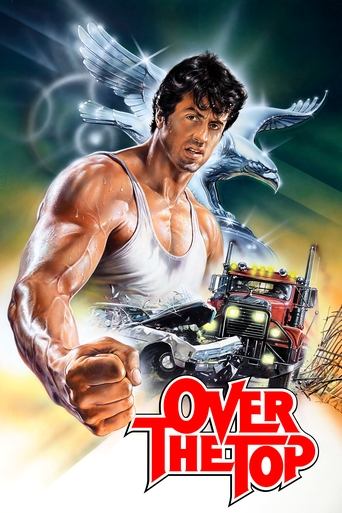
Lincoln Hawk a hard-luck big-rig trucker takes us under the glaring Las Vegas lights for all the boisterous action of the World Armwrestling Championship. Relying on wits and willpower, Hawk tries to rebuild his life by capturing the first-place prize money, and the love of the son he abandoned years earlier into the keeping of his rich, ruthless father-in-law.
Over the Top (1987) is available to stream on Amazon Prime Video (included with Prime membership as of early 2026) and on Tubi for free with ads. It is also available for digital rental on Apple TV, Vudu, and Google Play for around $3.99. Stallone was reportedly paid approximately $12 million for the film, which was one of the largest actor paydays of the mid-1980s — a figure that looks reasonable given he was coming off Rocky IV and Rambo: First Blood Part II within the previous 18 months.
The film itself is exactly what you'd expect: earnest, improbable, set largely at a Las Vegas arm-wrestling championship. It's worth watching once if you have any affection for 1980s action cinema. It is not, under any circumstances, a guide to OTT streaming infrastructure.
How to Actually Manage Your OTT Subscriptions
The practical answer here isn't a list of tips — it's a system. OTT services are designed to be set-and-forget, which is why subscription creep is so common. The solution is active tracking.
Specifically:
Know what you're paying for. List every service, its monthly cost, and its renewal date. Most people can't do this accurately from memory. The average household has at least one subscription they forgot about.
Track expiring content. If there's a movie or show you want to watch before it leaves a platform, you need to know when it's leaving. OTT services do not send you reminders. Some don't even display leaving dates prominently.
Rotate subscriptions strategically. Because OTT services don't penalise cancellation the way cable contracts did, you can cancel and re-subscribe. Binge the new season, cancel, come back in six months. This is now a legitimate strategy — though it requires tracking when original content drops.
WatchDeck is built specifically for this workflow: tracking what you're subscribed to, surfacing content that's about to leave your active services, and giving you an honest picture of your monthly streaming spend. If you're comparing it to other tracking options, the best Trakt alternative comparison covers the landscape of dedicated streaming trackers fairly.
For people primarily interested in which OTT services have the strongest specific genre catalogues — horror, in particular — the complete streaming service ranking by genre is the right starting point. OTT fragmentation hits genre viewers hardest, because the best content in any niche is spread across three or four platforms with no central home.
The Future of OTT: Rebundling
As of early 2026, the industry trend is unmistakable: OTT services are rebundling. Disney+, Hulu, and Max offer joint subscriptions. Apple One bundles Apple TV+ with other Apple services. Comcast offers a Peacock/Netflix/Apple TV+ bundle. Verizon and T-Mobile bundle streaming services with phone plans.
This is the industry acknowledging that the fragmented multi-service model is unsustainable from a churn perspective. Services lose 5–8% of their subscribers every month on average (Antenna, 2025). Bundles reduce churn because cancelling one service means losing access to others.
Whether rebundling actually solves the consumer problem — confusing costs, unclear content availability, expiring titles — is a different question. So far, the bundles have mostly added pricing tiers without improving discoverability. The fundamental OTT management problem hasn't gone away. It's just wearing different packaging.
FAQ
What does "over the top" mean in streaming? Over the top (OTT) streaming refers to video content delivered directly via the internet, bypassing traditional cable or satellite TV infrastructure. The phrase means the content travels "over the top" of the network pipe without requiring a pay-TV operator as an intermediary. Netflix, Disney+, Hulu, and Max are all OTT services.
Is Netflix an over the top streaming service? Yes. Netflix is one of the most prominent examples of an OTT streaming service. It delivers all content via the internet, with no cable or satellite carriage deal required. Netflix launched its streaming service in 2007 and by 2025 had over 300 million paid global subscribers, all accessing content via OTT delivery.
Where can you watch Over the Top (1987)? The 1987 Sylvester Stallone film Over the Top is available on Amazon Prime Video (included with Prime membership) and on Tubi (free, ad-supported) as of early 2026. It is also available for digital rental on Apple TV, Vudu, and Google Play for approximately $3.99.
How much was Stallone paid for Over the Top? Sylvester Stallone was paid approximately $12 million for Over the Top (1987), making it one of the largest actor salaries in Hollywood at the time. The figure reflected his star power following the back-to-back successes of Rocky IV (1985) and Rambo: First Blood Part II (1985).
What is the difference between OTT and cable TV? Cable TV delivers content through a physical cable infrastructure managed by a pay-TV operator, which controls what channels are available and at what price. OTT streaming delivers content via the public internet, bypassing cable operators entirely. OTT services are typically cheaper per service, but viewers now subscribe to multiple OTT platforms simultaneously, often matching or exceeding former cable costs.
What are the main types of OTT streaming services? OTT streaming services fall into three main categories: subscription video on demand (SVOD) like Netflix and Disney+, where users pay a monthly fee; ad-supported video on demand (AVOD) like Tubi and Pluto TV, which are free to viewers and funded by advertising; and virtual MVPDs like YouTube TV and Hulu with Live TV, which deliver live television channels via the internet rather than through a cable provider.
Why is managing multiple OTT services so difficult? OTT services each have separate apps, billing cycles, content libraries, and renewal dates. Content moves between platforms frequently, and services rarely notify subscribers when titles are about to expire. The average US household subscribed to 4.2 OTT services in 2025, creating a fragmented experience that requires active tracking to manage effectively — something cable TV never demanded of viewers.
Track everything in one place
WatchDeck connects all your streaming services so you never miss content that's expiring, and always know what's worth your time.
Try WatchDeck freearrow_forwardMore multi service management guides
Best Streaming Service for Horror Movies in 2026: The Complete Ranking
Shudder is the obvious answer for hardcore horror fans — but it's not the only answer. Here's exactly which service wins by subgenre, budget, and viewing habit.
13 min read
GuideHulu Shows in 2026: The Complete Guide to What's Actually Worth Watching
Hulu's library is larger and more varied than most people realize — but knowing what to watch requires more than a homepage scroll. Here's the complete, opinionated breakdown of what's actually worth your time.
9 min read
GuideTop 20 Movies of All Time: A Consensus List Built from Critics, Audiences, and Streaming Reality
Every 'best movies' list has an agenda — most just hide it. This consensus top 20 shows its methodology openly and tells you exactly where to stream all 20 films right now.
9 min read