
Prime Video streaming is Amazon's video-on-demand platform, bundled with Amazon Prime memberships at $139/year (or $14.99/month) in the US, but it is also available as a standalone subscription at $8.99/month without a Prime membership. That distinction matters more than Amazon would like you to notice. If you're comparing every major platform on one scorecard — including horror, drama, and documentary depth — the best streaming service rankings in 2026 are a solid starting point before you decide what to keep.
TL;DR
- Prime Video is technically free with Amazon Prime ($139/year or $14.99/month), but it now defaults to an ad-supported tier
- Ad-free costs an extra $2.99/month on top of Prime — that's not widely advertised
- Standalone Prime Video (no Prime membership): $8.99/month, also ad-supported
- Add-on channels (Paramount+, Starz, MGM+, etc.) are billed separately through the Prime Video interface and can double your effective monthly cost quietly
- Cancellation rates are rising — Amazon hasn't published churn data, but the January 2024 ad-tier rollout triggered a measurable spike in member complaints and cancellations
- Prime Video is genuinely strong in sports (Thursday Night Football in the US, some Premier League matches in the UK) and original drama, but its movie library is inconsistent
- The add-on channel model is the real business — Prime Video is increasingly a storefront, not just a streaming service
What Is Prime Video Streaming, Exactly?
Prime Video is Amazon's subscription video-on-demand service, first launched in 2006 as Amazon Unbox. It streams licensed and original movies, TV series, live sports, and — since late 2023 — live TV through third-party channel integrations. The service is available in over 240 countries and territories, making it one of the widest-distributed streaming platforms globally.
The key thing most casual users don't fully clock: Prime Video is simultaneously a streaming service and a channel marketplace. When you're browsing Prime Video and add Paramount+ or Starz to your account, those aren't Prime Video originals — they're separate subscriptions billed through Amazon's payment system. This distinction shows up very clearly on a credit card statement. It's less clear inside the Prime Video app itself, which is, I'd argue, the design intent.
If you've ever wondered why over-the-top streaming has gotten so confusing to manage, Prime Video's marketplace model is a large part of the reason.
Is Prime Video Still Free With Prime?
Yes — and no. Prime Video is included with an Amazon Prime membership, which costs $139/year or $14.99/month in the US as of April 2026. In that sense, it is "free" with Prime. But in January 2024, Amazon rolled out ads on Prime Video for all members and began charging an additional $2.99/month for an ad-free experience.
So the real cost math is: $139/year ($11.58/month effective) + $2.99/month for ad removal = $14.57/month if you want the same experience Prime Video used to offer at no upcharge. That's within shouting distance of Netflix's Standard plan.
The standalone Prime Video subscription — no Prime shipping, no Music, no other perks — is $8.99/month, also with ads. The ad-free add-on still costs $2.99/month on top.
A concrete comparison: Netflix's ad-supported tier is $7.99/month. Prime Video's ad-free tier (standalone) is $11.98/month. Netflix's Standard (ad-free) is $15.49/month. Prime Video actually slots in reasonably in that spread, but the bundled-Prime math obscures this.
Why Are People Cancelling Amazon Prime Memberships?
The short answer: the value equation shifted, and the ad-tier rollout was the breaking point for a lot of members.
Amazon Prime started as a shipping benefit with video as a bonus. By 2024, Prime Video had become a meaningful part of the value proposition — and then Amazon introduced ads without meaningfully lowering the price, while simultaneously raising the Prime annual fee (it went from $119 to $139 in 2022 in the US). Combine those two moves, and you get members doing the math and finding it doesn't add up the way it once did.
The practical complaints are specific:
- Ads on content subscribers already paid for — the perception of a bait-and-switch is real, even if technically it was within Amazon's terms
- Interface clutter — Prime Video's app bundles add-on channel content with Prime-included content in a way that makes it easy to accidentally start a paid subscription
- Shipping benefits eroding — same-day and next-day delivery guarantees have been inconsistent in many markets, weakening the non-video value
- Price increases with no added value — from the consumer's perspective, they paid more and got a worse product
Amazon is a publicly traded company and doesn't break out Prime churn numbers — its earnings calls focus on aggregate Prime membership counts, which were reported at over 200 million globally as of early 2024. But third-party consumer research firms tracked a notable cancellation spike in Q1 2024, the quarter immediately after ad rollout.
If you're managing multiple subscriptions and trying to decide which to cut, the full streaming service comparison lays out the cost-per-value calculation across every major platform.
Is Amazon Prime for Seniors $6.99 a Month?
Yes — with qualifications. Amazon offers a discounted Prime membership at $6.99/month for recipients of qualifying US government assistance programs (EBT, Medicaid, and a few others) through its Prime Access program, sometimes marketed toward low-income households. This is not specifically a "seniors" discount, though many senior households on fixed incomes qualify.
The $6.99/month rate applies to Prime Access members and gives full Prime Video access (with ads, like everyone else since January 2024). The ad-free $2.99 add-on still applies if you want it. So the floor for ad-free Prime Video through Prime Access is $9.98/month — still cheaper than the standard rate, but not $6.99 flat.
This program exists in the US only. Similar subsidy tiers exist in select other markets under different branding.
What Does Prime Video Actually Offer That's Worth Watching?
Prime Video's original content is genuinely one of the strongest in streaming — uneven, but with real highlights. The Boys has been the defining prestige-adjacent action series of the early 2020s. Rings of Power cost an estimated $715 million for its first season alone (Amazon's own figure, disclosed publicly), making it the most expensive single season of television ever produced, for better or worse.
The licensed library is where things get messy. Prime Video rotates its library more aggressively than Netflix, meaning something available in January may not be there in March. This is frustrating if you build a watchlist casually and return to it two months later.
For horror specifically: Prime Video has quietly built a decent genre catalog, but it's inconsistently curated and harder to navigate than Shudder or even Max.
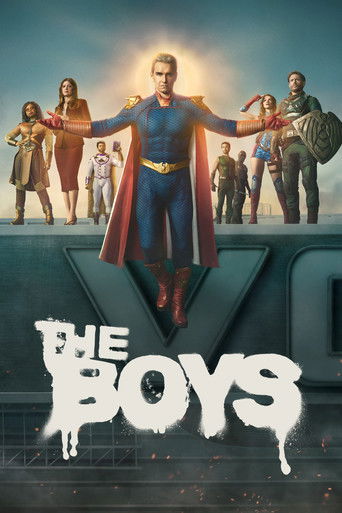
A group of vigilantes known informally as “The Boys” set out to take down corrupt superheroes with no more than blue-collar grit and a willingness to fight dirty.
The sports tier is legitimately competitive. Thursday Night Football (NFL) is an exclusive to Prime Video in the US through at least the 2032 season, per the deal Amazon signed in 2021. That single right makes Prime Video mandatory for a segment of viewers who wouldn't otherwise prioritize it. In the UK, Prime Video holds rights to 20 Premier League matches per season.
For series quality rankings across platforms — not just Prime — the best series streaming now covers what's actually worth watching across every major service in one ranked list.
What's the Difference Between Prime Video and Prime Streaming?
This question surfaces constantly and the answer is: there is no meaningful functional difference. "Prime streaming" is informal shorthand for the video content included with an Amazon Prime membership. Prime Video is the brand name for the platform that delivers it.
The confusion is partly Amazon's fault. The company operates:
- Prime Video: the streaming platform (movies, TV, originals, sports)
- Prime Music: a separate music streaming component of Prime
- Amazon Music Unlimited: a separate, paid-tier music service
- Prime Reading / Kindle Unlimited: book access, also tiered
When someone says "Prime streaming," they almost always mean Prime Video specifically. The term doesn't refer to a distinct product.
How Prime Video's Add-On Channel Model Actually Works
This is the part Amazon's marketing glosses over, and it's the most important thing to understand if you're managing a multi-service household budget.
Prime Video acts as an aggregator for third-party streaming channels — Paramount+, Starz, MGM+, Shudder, BritBox, AMC+, and dozens more. You can subscribe to these directly through the Prime Video interface. They appear inside the Prime Video app alongside Prime-included content, but they are separate monthly charges.
The problem: the UI does not make this difference obvious. There's no clear visual divider that says "you're now leaving included content." A casual user can easily add three or four channels, watch them for a month, and find a credit card statement $40 heavier than expected.
This model is excellent for Amazon (high-margin SaaS commission on each channel subscription) and genuinely convenient for users who want one login. It's bad for your budget awareness. If you want a single dashboard that shows all your streaming costs including Prime add-ons, tracking tools like WatchDeck are built exactly for that use case.
For anyone trying to compare tracker options, a breakdown of JustWatch alternatives covers which apps handle multi-service cost tracking and expiring content alerts best.
Should You Keep Prime Video in 2026?
Honest answer: it depends on whether you're paying for Prime anyway.
If you have Amazon Prime for shipping and other perks, Prime Video is worth using — the originals alone justify the time investment, and Thursday Night Football is an exclusive draw. The question is whether to add the $2.99/month ad-free tier (yes, probably, if you watch more than two hours a week).
If you're evaluating Prime Video purely as a standalone streaming service at $8.99–$11.98/month, the math is harder. Netflix has a larger library of consistently available content. Apple TV+ has a smaller but higher-quality original slate — Apple TV+ is worth a serious look if original prestige drama is what you're after. Hulu is better for next-day broadcast TV. Hulu's series library is specifically stronger in current-season network drama than Prime Video by a significant margin.
Prime Video is not a bad service. It's a complicated one. The add-on channel model means it can quietly become the most expensive line on your streaming bill if you're not watching the charges.
For anyone building a final ranking of where Prime Video sits across genre categories — including horror, which is one of Prime's weaker spots — the complete streaming service ranking is the best external reference to anchor that decision.
FAQ
Is Prime Video free with Amazon Prime? Prime Video is included with an Amazon Prime membership ($139/year or $14.99/month in the US), but since January 2024, all Prime Video access defaults to an ad-supported tier. Removing ads costs an additional $2.99/month on top of your Prime membership fee.
What is the standalone Prime Video price in 2026? As of April 2026, standalone Prime Video — without an Amazon Prime membership — costs $8.99/month in the US. This tier includes ads. The ad-free add-on costs an additional $2.99/month, bringing the ad-free standalone total to $11.98/month.
What's the difference between Prime Video and Prime streaming? There is no functional difference. "Prime streaming" is informal language referring to the video content available through Amazon Prime. Prime Video is the official brand name for the platform. They refer to the same thing.
Is there a discounted Prime Video rate for seniors or low-income households? Amazon offers Prime Access at $6.99/month for US recipients of qualifying government assistance programs including EBT and Medicaid. This is not exclusively a seniors' program, but many seniors on fixed incomes qualify. Prime Video with this membership is ad-supported; the ad-free add-on still costs $2.99/month extra.
Why are people cancelling Amazon Prime? The January 2024 introduction of ads on Prime Video — without a price reduction — is the most commonly cited reason. Combined with a 2022 price increase from $119 to $139/year, many members found the value equation had shifted unfavorably. Inconsistent shipping speeds and a cluttered app interface contributed to the perception.
Can I get Prime Video without paying for full Amazon Prime? Yes. Amazon offers a standalone Prime Video subscription at $8.99/month that does not include Prime shipping, Prime Music, or other Prime benefits. It gives access to Prime Video's included content with ads.
What add-on channels are available through Prime Video? As of April 2026, Prime Video's channel marketplace includes Paramount+, Starz, MGM+, Shudder, BritBox, AMC+, PBS Masterpiece, and over 100 other channels. These are billed separately from your Prime or Prime Video subscription and appear as additional monthly charges.
Does Prime Video have exclusive sports content? Yes. Prime Video holds exclusive US streaming rights to Thursday Night Football (NFL) through at least the 2032 season, and streams 20 Premier League matches per season in the UK. Sports exclusives are among Prime Video's strongest competitive differentiators.
Track everything in one place
WatchDeck connects all your streaming services so you never miss content that's expiring, and always know what's worth your time.
Try WatchDeck freearrow_forwardMore multi service management guides
Best Streaming Service for Horror Movies in 2026: The Complete Ranking
Shudder is the obvious answer for hardcore horror fans — but it's not the only answer. Here's exactly which service wins by subgenre, budget, and viewing habit.
13 min read
GuideHulu Shows in 2026: The Complete Guide to What's Actually Worth Watching
Hulu's library is larger and more varied than most people realize — but knowing what to watch requires more than a homepage scroll. Here's the complete, opinionated breakdown of what's actually worth your time.
9 min read
GuideTop 20 Movies of All Time: A Consensus List Built from Critics, Audiences, and Streaming Reality
Every 'best movies' list has an agenda — most just hide it. This consensus top 20 shows its methodology openly and tells you exactly where to stream all 20 films right now.
9 min read